St. Andrew's Store
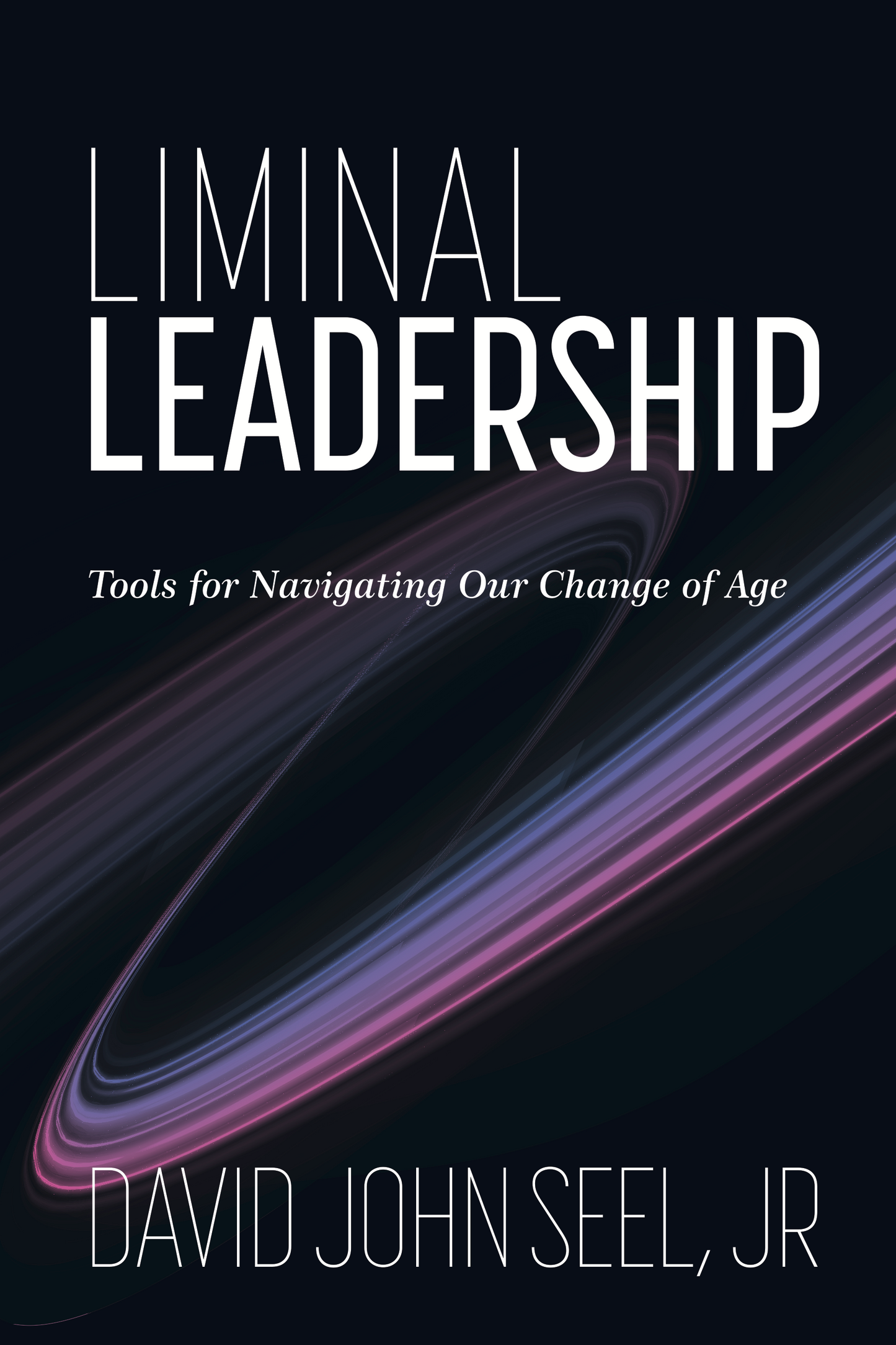
Liminal Leadership: Tools for Navigating Our Change of Age
Liminal Leadership: Tools for Navigating Our Change of Age
Couldn't load pickup availability
We are not living through an age of change—we are living through a change of age. In Liminal Leadership, cultural observer and leadership strategist David John Seel, Jr. argues that the leadership models that guided institutions through the modern era are no longer adequate for our present moment. Technological acceleration, cultural erosion, and moral fragmentation have converged to create a liminal condition: a threshold space in which the old no longer works and the new has not yet emerged.
Liminal leadership is the form of leadership required in such moments. It is leadership exercised amid uncertainty, loss, and disorientation—when inherited assumptions fail, institutional authority weakens, and outcomes cannot be guaranteed. In liminal seasons, leaders cannot rely on technical expertise or managerial efficiency alone; they must learn to discern what time it is, tell the truth about decline, and guide people through transition without false reassurance.
Drawing on theology, cultural analysis, leadership theory, and lived experience, Seel contends that many contemporary leadership failures stem from a misreading of the moment itself. We have treated a civilizational threshold as though it were a temporary disruption. As a result, leaders often reach for strategies designed for stability when what is required instead is moral clarity, imaginative courage, and responsibility for people rather than systems.
Liminal Leadership offers tools for leaders who find themselves responsible for direction in conditions of ambiguity—leaders in education, nonprofits, churches, boards, and institutions who must hold communities together while familiar structures erode. Rather than promising control or success, the book explores what faithful leadership looks like when authority must be earned anew, when formation matters more than optimization, and when the future cannot yet be named.
The book examines:
- Why modern leadership models falter during periods of civilizational transition
- What “liminality” means, and why it describes the defining condition of our time
- The difference between managing stable systems and leading people through loss
- Why discernment, not technique, is the central leadership task today
- The moral weight leaders bear when institutions are unraveling
- The role of imagination and courage when outcomes remain uncertain
- How Christian theological wisdom can illuminate leadership without becoming ideological
Liminal Leadership is not a manual for growth, efficiency, or success. It is a sober and humane reflection on responsibility in a time of cultural breakdown—written for leaders who understand that their task is not to preserve the old world at all costs, but to accompany people faithfully through a change of age toward what comes next.